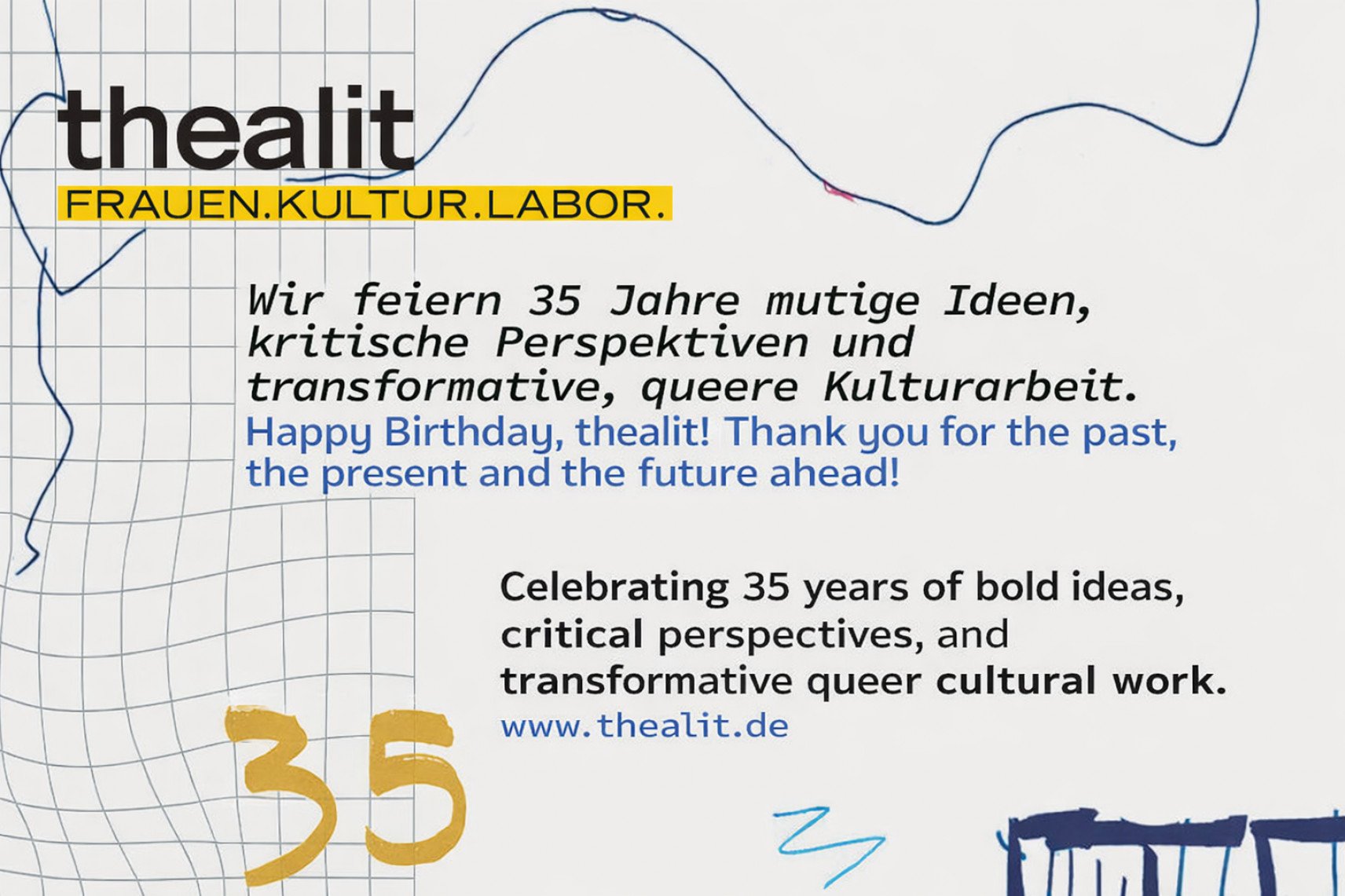
We celebrate 35 years of bold ideas, critical perspectives, and transformative queer cultural work.
Happy Birthday, thealit! Thank you for the past, for the present and for the future ahead!
Statement by Stadtkultur Bremen e.V.
We are observing current developments in cultural policy with growing concern, as they extend far beyond individual cases: the exclusion of three bookstores from Deutscher Buchhandlungspreis (German Bookstore Award), allegations against the Bremen cultural center 'Kukoon', and the announcement by Minister of State for Culture Wolfram Weimer that he intends to expand the application of the 'Haber procedure' and incorporate it into funding decisions.
What is emerging here is a paradigm shift: toward a creeping restriction of the freedom of art guaranteed by the Basic Law, toward the erosion of minimum standards of the rule of law, toward the establishment of political litmus tests—and, not least, toward the narrowing of spaces for free public discourse, which are indispensable as the foundation of a pluralistic and vibrant democracy.
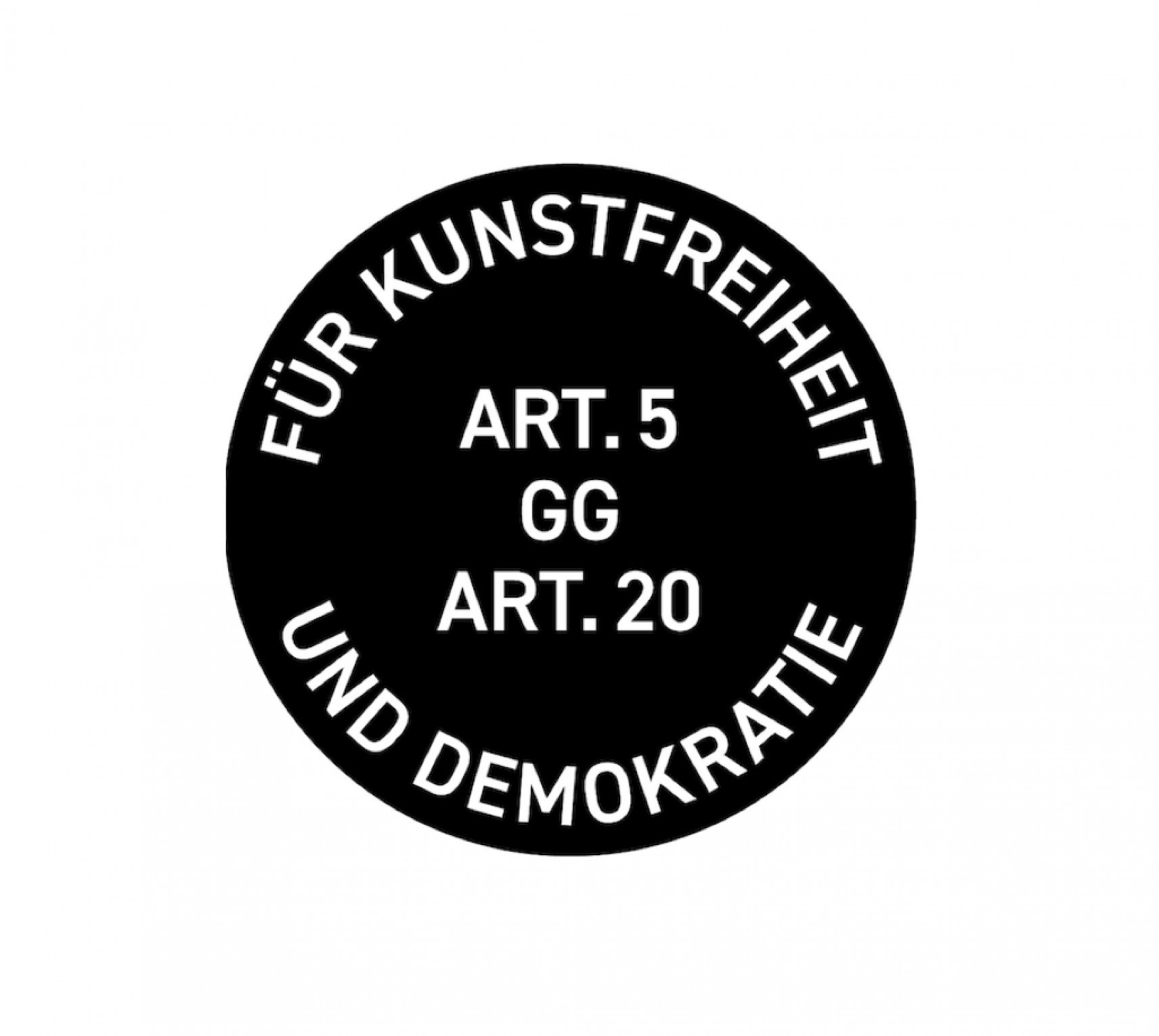
Freedom of artistic expression is unconditionally guaranteed under Article 5, Section 3 of the German Constitution. What constitutes art is determined by the discourse within the art world itself-not by government agencies or security authorities. To undermine this principle jeopardizes the very foundation of our democratic culture.
We strongly endorse the criticism voiced by numerous institutions: decisions regarding funding and awards must be transparent, verifiable, and based on professional criteria. Procedures whose underlying principles remain secret and that deny those affected the opportunity to comment violate the minimum standards of the rule of law.
We view the inclusion of inquiries from the Office for the Protection of the Constitution in cultural funding as highly problematic. It amounts to a form of ideological screening and opens the door to a practice of political pre-selection. Such a development would cause lasting damage to trust in state cultural policy.
Particularly alarming is the prospect of expanding these procedures while simultaneously compiling lists of jury members. Even if this is formally justified on the grounds of transparency, it creates the impression of structural control and potential influence. The independence of juries—a central prerequisite for art’s autonomy from the state—must not be undermined, either in fact or in appearance.
Anyone who retroactively corrects or politically overrides jury decisions not only undermines the legitimacy of individual proceedings but also undermines the sanctuary of free art as a whole.
We firmly oppose any form of ideological screening and a culture of suspicion and non-transparent scrutiny. Art and cultural venues are not security risks, but spaces for open—and even controversial—exchange. Their role is not to smooth over social conflicts, but to bring them to light.
Of course, all cultural institutions operate within the framework of the Basic Law. However, the evaluation of their work must be based on their cultural contribution—not on sweeping generalizations or secret assessments.
Bremen is known for its diverse, international, and open cultural landscape. Against this backdrop, procedures that are perceived as opaque, counterproductive, and damaging to the city’s reputation are simply unacceptable.
We demand:
– unrestricted respect for artistic freedom, – an end to non-transparent review processes and secret evaluations,
– no ideological screening in cultural funding, – the consistent preservation of jury independence,
– and the safeguarding of the autonomy of cultural institutions.
When government agencies begin to filter cultural practices based on political expediency, the principle of art independent of the state is undermined. Democracy, however, thrives not on conformity but on open debate: art creates a public sphere—and the public sphere needs freedom, dissent, and a diversity of voices.
In times of profound social change, it is precisely the open, unregulated spaces of art that provide a sense of direction. Protecting these spaces is a central task of democratic politics.
NOTE ON ACCESSIBILITY:
Always up to date